This site is currently undergoing a major overhaul. We hope to have it improved and ready to rock your socks off soon. In the mean time, feel free to look around, but please know that more resources are coming every day and this is a work in progress. Thank you.
Showing posts with label RuthAnne Snow. Show all posts

Monday, August 26, 2013

Beating Writer's Block

It's all happened to every writer at one point or another. You have a great idea! Great character with a great voice in a really great dilemma! Things are going swimmingly, until suddenly ... they are not.

You don't know what to do. You hate everything. Or (worst possible scenario) you are BORED.
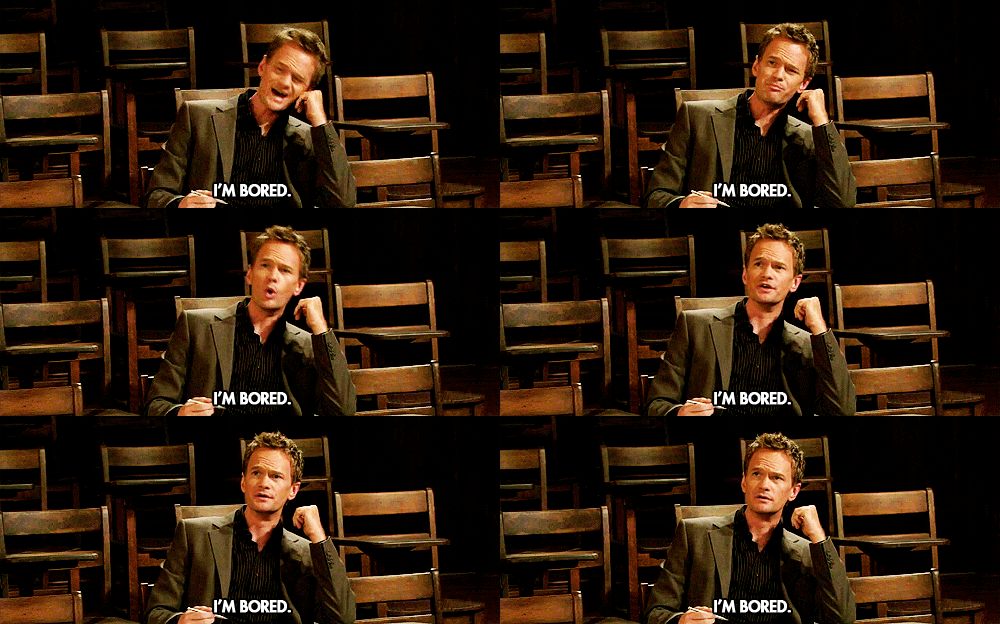
You lost the spark in your writing. And you can't figure out why.

Before I tell you what to do, let me tell you a couple stories.

Stephen King is one of my all-time favorite writers, and this is one of my all-time favorite analogies, so bear with if you've already heard me deliver it. In Misery, King describes a writer named Paul who is being held captive by his biggest (read: craziest) fan. Writers often give their opinions about life and humanity through their work, and lots of people view Misery as a prime example of King telling the reader what it is like to be a writer.

The line that stuck out to me from Misery is, “Paulie, can you?” You see, Paul's problem is that he killed off his main character and ended a long-running series. Annie, the fan who "rescued" him from a car accident, is insisting that he write himself out of that corner and resurrect poor Misery Chastain, or be killed off himself. And of course, Paul is thinking, "How do I get Misery out of her coffin and back in the land of the living?"

Paul doesn't want to write any more Misery books. That's why he killed Misery. But in this one instance, he really, really has to.
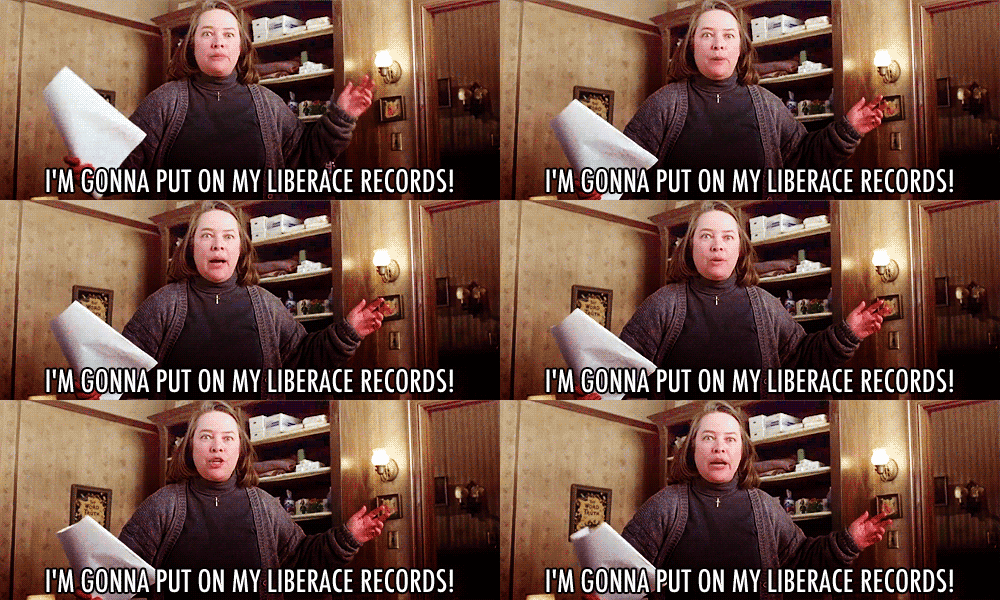
In his drug-addled, foot-chopped-off condition, Paul starts hallucinating about a memory from kindergarten when the little kids played a game where one started a story, and the next kid added to it, and then the kid after that, and so forth. Paulie, can you?

And the point of the game wasn’t to come up with some Pulitzer-prize winner or a New York Times bestseller ... it was just to keep the story going. “Can you, or can’t you?” And if you can’t, the game is over (and in poor Paul’s case, you’re going to be murdered and chopped up into little bits.)

Writing, whether you're plotting or pantsing, is sort of like a game of “Can you or can’t you.”  If you want to be a good writer, all that really matters is if you “can.”  You may be a genius with the ability to write prose that would make Shakespeare weep, but if you “can’t” on a consistent basis, then you can’t. People who put in the time and effort, and are honest with themselves, will always be able to get to the point where they “can” on a consistent basis.

Look at this one other way (not to belabor the point). A friend of mine is a computer programmer, and he pointed me to this anecdote:


"A ceramics teacher announced on opening day that he was dividing the class into two groups. All those on the left side of the studio, he said, would be graded solely on the quantity of work they produced, all those on the right solely on its quality. His procedure was simple: on the final day of class he would bring in his bathroom scales and weigh the work of the "quantity" group: fifty pound of pots rated an "A", forty pounds a "B", and so on. Those being graded on "quality", however, needed to produce only one pot - albeit a perfect one - to get an "A".
Well, came grading time and a curious fact emerged: the works of highest quality were all produced by the group being graded for quantity. It seems that while the "quantity" group was busily churning out piles of work - and learning from their mistakes - the "quality" group had sat theorizing about perfection, and in the end had little more to show for their efforts than grandiose theories and a pile of dead clay."

The lesson, of course, is whether you're writing books or code or throwing pots, the more you do, the better you are.

So what to do when you've felt the spark go out in your writing? Well, I think you have a few options.

1. Take a mental palate cleanser. Go for a walk. Play a game. Read a book. Watch (good) TV. No Keeping Up With The Kardashians, we're talking Breaking Bad or Parks and Rec or nothing. If it doesn't make you think (and I do mean THINK) about something different for awhile, it's useless to you.
When you feel refreshed, return to the writing. And if you still don't feel the spark, go to Step 2.

2. Quit making excuses and start typing, Paulie. Remember our pal Paul and his dilemma? Do you think it mattered to him that he hated Misery and hated that she couldn't ever pick between Ian and Geoffrey and he wished he'd never started the stupid series? NO! His foot was about to be chopped off! So just write for awhile, like your ability to remain ambulatory depends on it. And after awhile, evaluate whether that worked. If it didn't, go to Step 3.


3. Take everything you've just written and put it in your "Extras" folder. I have a theory that no writer really ever deletes anything. I can't bring myself to erase pages (and days) of hard work. Usually when something has to go, I put it in what I call my "Extras" folder. 

This is helpful for two reasons. One, you never know when something you wrote in that folder will be helpful after all. (It's happened to me a few times.) Two, it's nice to have a tangible (as tangible as a computer file is) reminder of all the pots you've thrown. Now move to Step 4.

4. Continue your current story in a different spot. So you've gotten yourself bogged down. Your main character is trapped on the top floor of the house and the murderer is in the kitchen, and there's no way she can get outside without passing him. You don't know what to do, and the more you think about it, the more you want Det. Ex Machina to show up and save the day because you're so confused/frustrated/bored
. 
This is what I want you to do: type "XXX," then hit your return/enter key a couple times and start somewhere else. Oh, now your main character is having a sweet moment with her love interest. Oh, now you're revealing how the bad guy left fiber evidence behind at the scene. Oh, now you're describing a really awesome road trip that actually has no place in your novel, but at least you're stoked to be writing it! 
When you're done, all you have to do is find all the spots you typed XXX and fill in your gaps. Usually you're going to find that those spots aren't nearly as bad as they were the first go-around. Did that work? If not, skip to Step 5.

5. Stop. This book is an abandoned pot. Don't feel bad about it, because the more pots you throw, the better writer you're going to be. But don't keep coming back to it, because if this project isn't ever going to hold water properly (the analogy has now gone too far ...) you're wasting your time. Who wants to agonize over an unfinished pot? Save it in a file on your desktop somewhere and move on to your next project. Someday you might find some use for it, or not. But don't feel bad about moving on.

Go make something else!

Thursday, August 22, 2013

Plotting Vs. Pantsing

If you're new to the writing and publishing game, you've probably heard a lot about this "plotting versus pantsing" business and wondering what the heck we're all talking about. In essence, we're describing two different ways of writing a story: plotting, which is sitting down and outlining all the events of your story before you begin drafting it, and pantsing, which is when you have a basic concept and then you just let your typin' fingers take you wherever your imagination leads.

I have written (and by that, I mean COMPLETED) two "pants" novels and one "plotted" novel. When I first began writing, pantsing was what came most naturally to me. I usually come to a story when one character, or one concept, pops into my head. What I usually did at that point was to just start writing, without any thought for where I might end up.


When I wrote my most recent novel, however, I realized that path wasn't going to cut it for me. First, because my second novel had taken me TWO YEARS to finish, and that was when I had the luxury of living a student's lifestyle. Second, I ended up cutting 1/3 of the novel, just because (as much fun as it was to write) I tended to launch into tangents (which, of course, I didn't realize were tangents at the time).
So why did I switch to plotting for novel No. 3?

As an attorney, there was no way I was going to be able to just write whenever. Most days I come home intellectually drained. I might be able to read a book, but usually all I have in me is to watch some TV or take my dog to the park. If I were going to pants my novels in that state, I suspect it would take me a lot longer than two years (and involve significantly more cutting).


So I sat down with an outline like the one described in Save The Cat and plotted out my third book. And you know what? It didn't always feel right to me to do that. But I stuck with that method, and ... it worked. For that book, it was actually sort of perfect. From the moment I figured out what I wanted to write about until the day I put the final period on the final sentence, only 11 months had passed. After two months of revisions, I was ready to start submitting it.


Pantsing and plotting both have strengths and weaknesses. When I was pansting, it took me a long time to draft and even longer to revise. But when I was plotting, there were times when I felt like the "spark" in my writing was missing. (I'll talk more about what to do when that happens later.) Ultimately, though, all that really matters is whether or not your chosen method results in a final product.


Now, are there overlap between the two methods? DEFINITELY! With my current project (which I am plotting), I realized halfway through that a character was missing. So I added him in! After all, an outline is just a tool, not a contract. 


What you need to do is honestly evaluate yourself. Do you feel more comfortable writing when you know where things are going, or do you feel more comfortable when you are just letting your imagine run rampant? Once you've figured that out, ask yourself whether this particular project will benefit from the alternative method. 


In my heart, I'm still a pantser. But at this point in my life, plotting is the way to go.


I will be the first one to tell you that if you are a natural born pantser, THERE IS NOTHING WRONG WITH THAT. We all have to write in the way that feels most natural to us.

This post was generously written by RuthAnne Snow. RuthAnne is a lawyer and aspiring writer. She lives in an old house with a little dog and a big porch. She blogs at http://andthenshewaslikeblahblahblah.blogspot.com/. Follow her on twitter @ruthanne_snow and facebook at https://www.facebook.com/RuthAnneSnow.

If you'd like to contribute to MMWH, please email ginadenny129 at gmail dot com 

Tuesday, August 13, 2013

Defining "New Adult"

There are so many opinions out there about new adult, we feel very blessed that you have clicked on this here post to discuss the age-old (or at least four-years-old) question: Is “New Adult” a thing?

I’m going to suggest the answer is yes … with some caveats. 

New Adult is basically a category of books written for individuals aged 18-25ish, about protagonists aged 18-25ish. It is definitely a modern convention. How so? Well, think about it. Would you consider Sense and Sensibility “new adult”? No, definitely not. 

Maybe we need to back up a bit. Not so very long ago, “young adult” was not a category of fiction. In fact, the word “teenager” itself was only coined in the 20th century. It makes sense when you think about it. 100 years ago, “teenagers” were getting married, having babies, going to war, working jobs, living independently—things that we currently believe only adults do. There was a fairly clear demarcation between childhood and adulthood—you were one, and then you were the other.

As society changed, so did our conceptualization of childhood and adulthood, with science recognizing a fact that seems obvious today: that in addition to the different ways we socialize adolescents in the modern era, there is something different about the brain chemistry of a 14 year old compared to a 24 year old. And with that societal change came a change in literature—books devoted to the experiences of the teen years. 

So what does that mean for “new adult”?

Well, it’s fair to say that the 18-25 age group faces a unique set of challenges they have not faced in the past. (For now, we’ll call the entire group “millenials,” just to save time, though I think that is misleading in a way.) Just as the markers of adulthood (independence, adventure, marriage, family) have been pushed back for teenagers, so they’ve been pushed further into the late 20s. Student loan debt is crushing many millenials at the same time the job market it weak. Many millenials grew up with the first generation of helicopter parents, so their first steps into adulthood are more tentative. More and more of them grew up as children of divorce, so their ideas about adult romantic relationships are more cynical. 

Which brings us back to Sense and Sensibility. Are Marianne and Elinor Dashwood “new adult” protagonists? They’re in the right age group. Their dilemmas—financial insecurity, lack of confidence in the future, uncertainty in romantic relationships—are similar.

But in the end, I would argue that “new adult” is a modern conception. Marianne and Elinor may be struggling to find their place in the world, but there is no doubt they are adults. Their problems were not unique to their age group—their problems were common problems for many adults in their era.

So here’s the caveat on new adult: it is currently a thing. 

But it might not always be a thing.

At the moment, it is the product of a unique set of circumstances. Eventually, those circumstances will change. I believe new adult’s staying power—or lack thereof—will depend entirely on whether new adult expands beyond the “College Kids with Problems” genre.

I am simplifying for the sake of argument—I do know there are a handful of New Adult novels that fall outside this description. But the vast (and I mean, vaaaaaaast) majority are romance novels with a female college student as the protagonist.This leads to a lot of logical criticisms: that "new adult" is a genre that is synonymous with "chick lit," that "new adult" is just sexed-up young adult, that "new adult" is just an invention of self-publishing.

The proponents of "new adult" will be able to present plenty of counter-arguments to those assertions, but really, the only thing that will prove that New Adult is a real category is when there is a strong showing of multiple genres within the New Adult category. New adult thrillers, new adult sci fi, new adult romance, new adult mystery, new adult horror, etc.

For the record, I hope new adult is here to stay. As someone who has written some new adult and is working on more, it would be a real problem for me personally if the category were suddenly to become un-sellable. I suspect that will not be the case. But at the moment, new adult is a transitory category. Its future will depend entirely on how writers shape it.

This post was generously written by RuthAnne Snow. RuthAnne is a lawyer and aspiring writer. She lives in an old house with a little dog and a big porch. She blogs at http://andthenshewaslikeblahblahblah.blogspot.com/. Follow her on twitter @ruthanne_snow and facebook at https://www.facebook.com/RuthAnneSnow.

If you'd like to contribute to MMWH, please email ginadenny129 at gmail dot com 

Monday, August 12, 2013

Defining Categories

Picture Book. Middle Grade. Young Adult. New Adult. (Whaa? Don’t worry, we’ll discuss this one further.) Adult. 

These are examples of “categories.”

In fiction, category is different than genre. Genre describes the type of story, like whether there are aliens or ghosts or bonnets or happily ever afters. Category tells us who this book is for, where in the bookstore this book is located. It is in the section for grown up readers? Teen readers? Kids? Little kids? 

In that sense, category and genre are a lot like the divisions of life we all learned about in junior high biology. Remember Kingdom-Phylum-Class-Order-Family-Genus-Species? Well, when it comes to books, it goes Fiction/Non Fiction --> Category --> Genre, which is even simpler since it’s just three steps instead of seven.

So what are the differences between these categories? 

Well, most of them are self-explanatory. Picture books are for the youngest readers. They are primarily art and the language is simple. 

Middle grade is a category of books for kids just breaking into the chapter book scene. Think Goosebumps and The Baby-sitters Club and Diary of a Wimpy Kid. The pictures are gone (or significantly reduced), the sentences are more complex. 

Young adult is a category of books intended for teenaged readers. (Note that I said intended. We’ll talk about crossovers in a minute.) The characters are teenagers, and they deal with problems like a teenager would. Now, up until a few decades ago, “young adult” didn’t exist as a category. You were either a juvenile reader, or you weren’t. But then breakout novels like S.E. Hinton’s The Outsiders were published, and it seemed obvious that in the literature market, there might need to be a sort of bridge between Nancy Drew and Stephanie Plum. And readers ate it up, which is why there are currently so many books for young adult readers out on the market today.

Which brings us to new adult. Like young adult, it’s a fairly recent invention of the publishing scene—as in, within-the-last-five-years-recent. There are some who would debate whether it’s a true category at all. But assuming it is, new adult is a category of books aimed primarily at readers who are older than teenagers, but not quite adult. You might even think of new adult as a product of the modern era, where a lot of the markers of adulthood are being pushed back further and further. Is a 20 year old a kid or an adult? It would seem the answer is “both.” And “new adult” books are aimed that audience. 

And then there’s adult, which always manages to sound just a wee-bit-dirty, thanks to that section of the video store with the beaded curtain. But when it comes to literature, "adult" simply means, “for adult readers.”

So here’s a few obvious questions. 

What is Twilight?

Well, Twilight is young adult. 

“But wait! Don’t adults read Twilight?”

Of course. But the question is not who currently reads a novel. The question is, "Who was the reader the author was envisioning when he or she was writing that story?" And there’s no doubt that Twilight, even though some characters are adults (and some are ancient immortals), was always intended for teenagers.

If you're still confused, think about The Stinky Cheese Man. No doubt, there are jokes in there for the adults who are reading that book to their kids -- but there's no way the author of The Stinky Cheese Man thought that 43-year-olds would ever cuddle up with his picture book on regular basis.

Let's look at another, more complicated example. What is Harry Potter? 

Well, Harry Potter and the Sorcerer’s Stone is definitely middle grade. It features an eleven-year-old protagonist who reacts to his problems like an eleven-year-old would. But by the time we move to Harry Potter and the Deathly Hallows, well, we’re clearly in young adult territory. Harry is seventeen, and while his problems (saving the wizarding world) have remained the same, his thought processes and reactions have definitely matured.

So what book transitions the Harry Potter series from middle grade into young adult? Well, that question is debatable, but for me it’s Harry Potter and the Order of the Phoenix. Harry has firmly entered Angst Town by book 5, and he won’t really leave until the end of The Half-Blood Prince. 

The Harry Potter series is not the only series to grow with its audience. The Sisterhood of the Traveling Pants (a young adult novel if there ever was one) engendered four sequels—two more young adults, a new adult (Forever in Blue), and an adult (Sisterhood Everlasting). Is it safe to say that the teenage fans of the original sisterhood probably followed the girls into college and onto adulthood? Certainly. But that fact alone doesn’t change the category of Sisterhood Everlasting into young adult.

So even when we’re talking about “crossover” novels (i.e., novels that end up breaking through to audiences for whom they were not originally intended), category is fairly easy to understand if you ask yourself, “If I had to pick just one, who is the author talking to with this book? A pre-schooler, a fifth grader, a teenager, someone just starting out on their own, or an adult?" Almost always, it will be very clear. And if you're the author, and you don't know the answer about your own novel? Well, you've got a problem that you better fix.  

And that's how you figure out category.

This post was generously written by RuthAnne Snow. RuthAnne is a lawyer and aspiring writer. She lives in an old house with a little dog and a big porch. She blogs at http://andthenshewaslikeblahblahblah.blogspot.com/. Follow her on twitter @ruthanne_snow and facebook at https://www.facebook.com/RuthAnneSnow.

If you'd like to contribute to MMWH, please email ginadenny129 at gmail dot com